Vietnamese Pho Recipe
Introduction
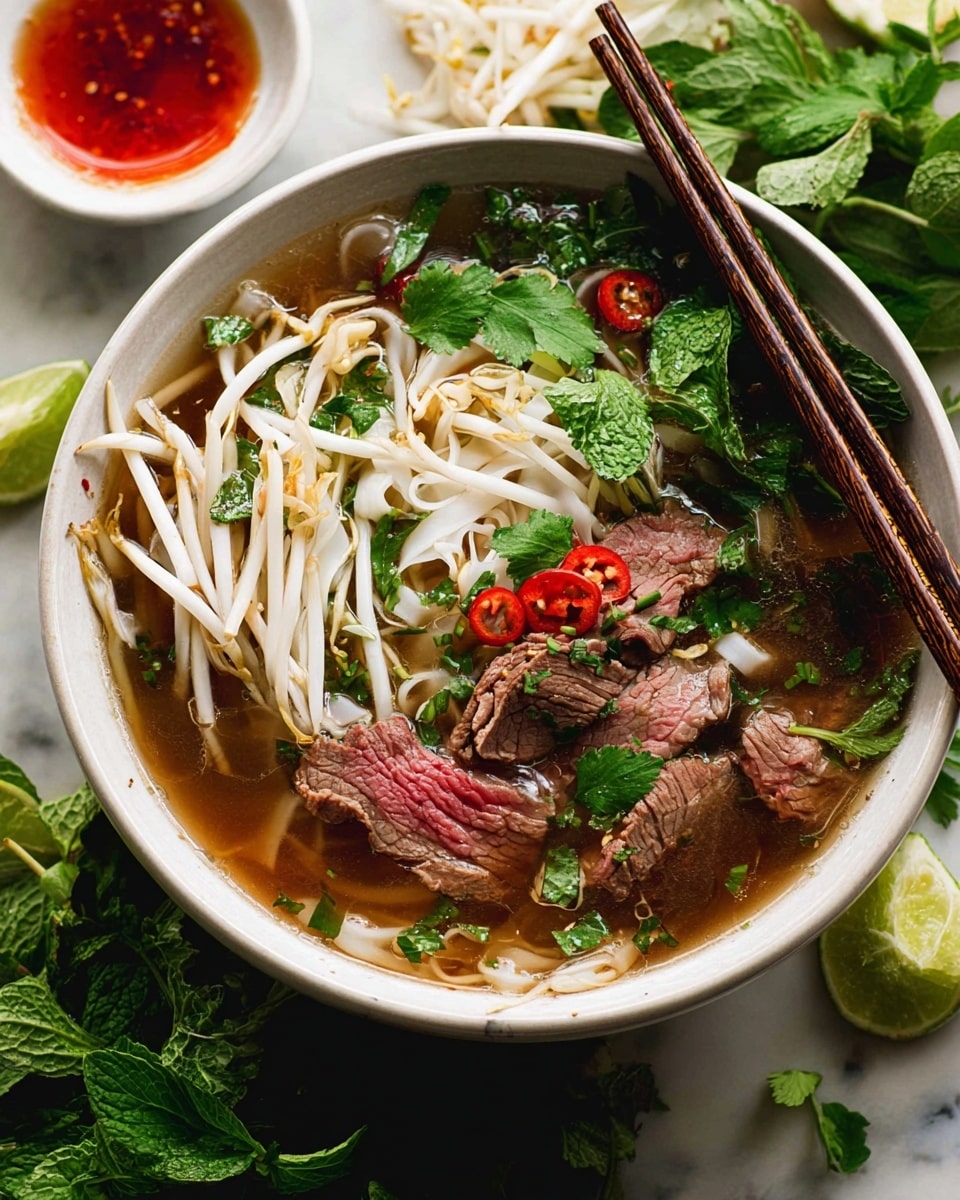
Vietnamese Pho is a fragrant and flavorful beef noodle soup that captures the essence of Vietnam’s culinary tradition. This comforting dish features a rich, spiced broth paired with tender beef slices and fresh herbs, perfect for any day you crave something warm and satisfying.
Ingredients
- 2 large onions, halved
- 150g (5oz) ginger, sliced down the centre
- 10 star anise
- 4 cinnamon quills
- 4 cardamom pods
- 3 cloves (spice cloves)
- 1.5 tbsp coriander seeds
- 1.5kg (3lb) beef brisket
- 1kg (2lb) meaty beef bones
- 1kg (2lb) marrow bones (leg, knuckle), cut to reveal marrow
- 3.5 litres (3.75 quarts) water (15 cups)
- 2 tbsp white sugar
- 1 tbsp salt
- 40 ml (3 tbsp) fish sauce
- 50g (1.5 oz) dried rice sticks (or 120g/4oz fresh)
- 30g (1 oz) beef tenderloin, raw, very thinly sliced
- 3 – 5 brisket slices (used for broth)
- Beansprouts, handful
- Thai basil, 3 – 5 sprigs
- Coriander/cilantro, 3 – 5 sprigs (or more basil)
- Lime wedges (optional)
- Finely sliced red chilli (optional)
- Hoisin sauce (optional)
- Sriracha (optional, for spiciness)
Instructions
- Step 1: Heat a heavy-based skillet over high heat without oil until smoking. Place the onion and ginger cut side down in the pan. Cook until charred on one side, then turn and char the other side briefly. Remove and set aside.
- Step 2: Toast the star anise, cinnamon quills, cardamom pods, cloves, and coriander seeds lightly in a dry skillet over medium-high heat for about 3 minutes until fragrant.
- Step 3: Rinse the beef bones and brisket under cold water. Place them in a large stock pot, cover with water, and bring to a boil. Boil for 5 minutes, then drain and rinse the bones and brisket again under running water.
- Step 4: Wipe out the pot and return it to the stove. Bring 3.5 litres (3.75 quarts) of fresh water to a boil. Add the cleaned bones, brisket, charred onion and ginger, toasted spices, sugar, and salt. The water should just barely cover the ingredients.
- Step 5: Cover the pot with a lid and simmer gently for 3 hours. Remove the brisket when it is tender, let it cool, then refrigerate for later use.
- Step 6: Continue to simmer the broth uncovered for another 40 minutes to concentrate the flavors.
- Step 7: Strain the broth into another pot, discarding the bones and spices. You should have about 2.5 litres (2.65 quarts) of rich broth; if you have more, reduce it further by simmering.
- Step 8: Stir in the fish sauce and adjust salt and sugar to taste. The broth should be beefy, aromatic, savory, and slightly sweet.
- Step 9: Prepare the rice noodles according to the packet instructions just before serving.
- Step 10: Place the noodles in bowls. Top with thin slices of raw beef tenderloin and the cooked brisket slices.
- Step 11: Ladle about 400ml (14 oz) of hot broth over the beef to cook the raw slices to medium rare.
- Step 12: Serve immediately with beansprouts, Thai basil, coriander, lime wedges, sliced chilli, hoisin sauce, and sriracha on the side for guests to garnish as they like.
Tips & Variations
- Char the onion and ginger thoroughly to add a smoky depth to the broth.
- Use fresh herbs like Thai basil and coriander for authentic flavor and freshness.
- Adjust the spiciness by adding more or less sliced red chili or sriracha sauce.
- For a vegetarian version, substitute beef with mushroom broth and add tofu and vegetables instead of meat.
- If you can’t find marrow bones, use other beef bones with some fat to enrich the broth.
Storage
Store leftover broth and brisket separately in airtight containers in the refrigerator for up to 3 days. Reheat the broth gently on the stove before serving. Cooked beef slices can be reheated briefly in the hot broth. Prepare fresh noodles and toppings when ready to serve for best texture and flavor.
How to Serve
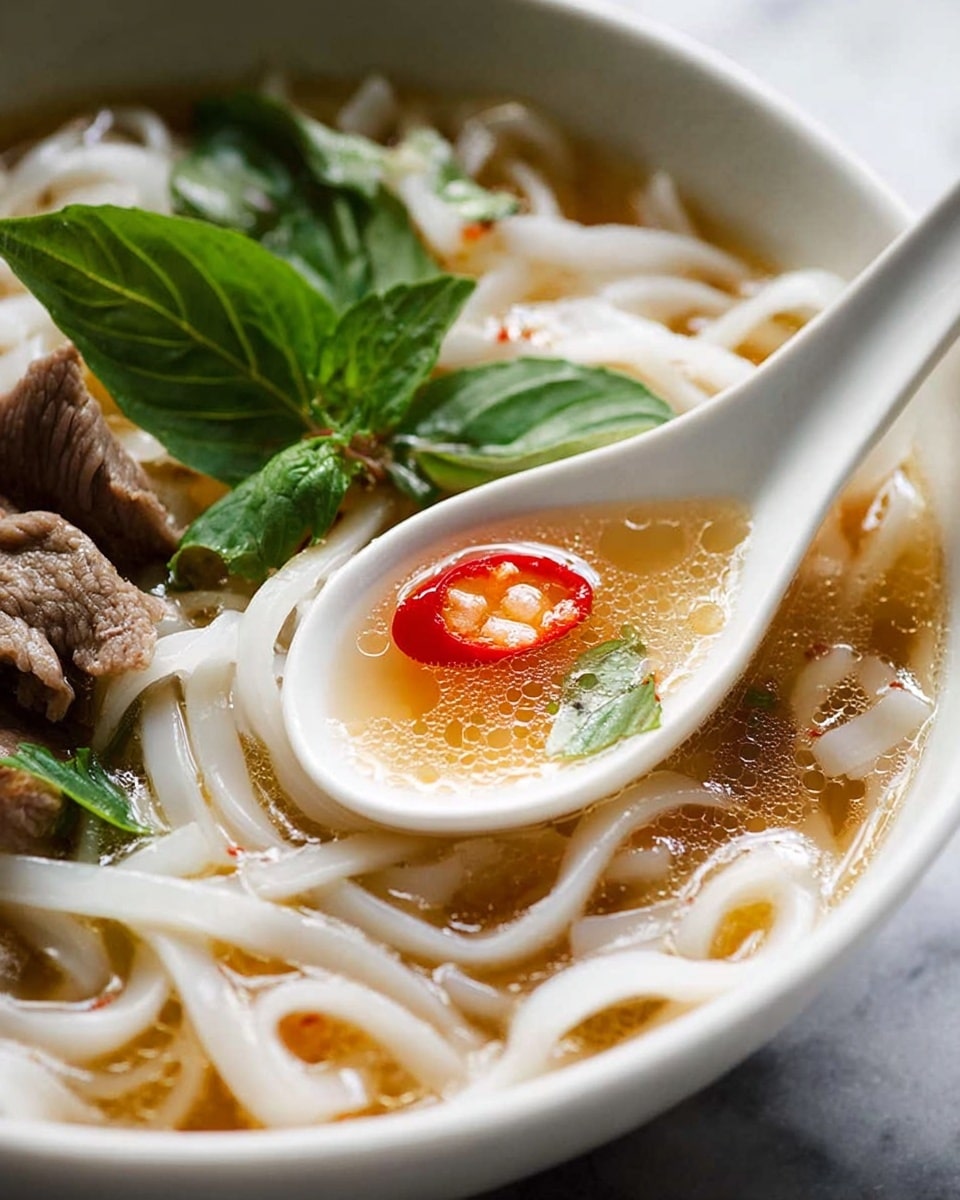
Serve this delicious recipe with your favorite sides.
FAQs
Can I use pre-made broth instead of making my own?
While pre-made broth can save time, homemade broth provides a richer, more authentic flavor. If using store-bought broth, enhance it with toasted spices and charred onion and ginger to mimic traditional pho broth.
What type of noodles are best for pho?
Traditional pho uses dried or fresh flat rice noodles often labeled as rice sticks or banh pho. Choose thin or medium widths based on your preference, and always cook them just before serving to avoid sogginess.
Print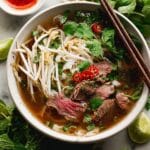
Vietnamese Pho Recipe
- Total Time: 4 hours 10 minutes
- Yield: 6 servings 1x
- Diet: Low Fat
Description
A classic Vietnamese Pho recipe that brings together a deeply aromatic beef broth infused with charred onions, ginger, and a blend of traditional spices like star anise and cinnamon. The broth simmers for hours over stovetop before being served with tender slices of brisket, raw beef tenderloin, rice noodles, and fresh herbs and garnishes for a flavorful, comforting bowl of Pho.
Ingredients
Aromatics and Spices
- 2 large onions, halved
- 150g / 5oz ginger, sliced down the centre
- 10 star anise
- 4 cinnamon quills
- 4 cardamom pods
- 3 cloves (spice)
- 1.5 tbsp coriander seeds
Meats and Bones
- 1.5kg / 3lb beef brisket
- 1kg / 2lb meaty beef bones
- 1kg / 2lb marrow bones (leg, knuckle), cut to reveal marrow
Liquids and Seasonings
- 3.5 litres / 3.75 quarts water (15 cups)
- 2 tbsp white sugar
- 1 tbsp salt
- 40 ml / 3 tbsp fish sauce
Noodles and Garnishes
- 50g / 1.5 oz dried rice sticks (or 120g/4oz fresh rice noodles)
- 30g / 1 oz beef tenderloin, raw, very thinly sliced
- 3 – 5 brisket slices (used for broth and serving)
- Beansprouts, handful
- Thai basil, 3 – 5 sprigs
- Coriander/cilantro, 3 – 5 sprigs (or more basil)
- Lime wedges
- Finely sliced red chilli
- Hoisin sauce
- Sriracha (for spiciness)
Instructions
- Aromatics: Heat a heavy-based skillet over high heat without oil until smoking. Place the halved onions and sliced ginger cut side down in the pan. Cook for a few minutes until they are charred, then turn and remove from heat. Set aside.
- Toast Spices: Using a dry skillet over medium-high heat, lightly toast the star anise, cinnamon quills, cardamom pods, cloves, and coriander seeds for about 3 minutes until fragrant.
- Remove Impurities: Rinse the beef bones and brisket under cold water. Place them in a large stockpot, cover with water, and bring to a boil. Boil for 5 minutes, then drain and rinse the bones and brisket again to clean off any impurities.
- Prepare Broth: Wipe the stockpot clean, then add 3.5 litres (3.75 quarts) of fresh water and bring to a boil. Add the cleaned bones and brisket, charred onions and ginger, toasted spices, sugar, and salt. The water should just barely cover everything.
- Simmer: Cover the pot with a lid and simmer gently on the stovetop for 3 hours to develop a rich beef broth.
- Remove Brisket: After 3 hours, remove the brisket from the broth. It should be tender and fall-apart. Let it cool then refrigerate for later use.
- Reduce Broth: Continue to simmer the remaining broth uncovered for 40 minutes to concentrate flavors.
- Strain Broth: Strain the broth through a fine mesh sieve into another pot, discarding the bones and spices. The broth volume should be about 2.5 litres (2.65 quarts). If there is more broth, reduce it further to concentrate flavor.
- Season Broth: Add fish sauce and adjust salt and sugar as needed. The broth should be beefy, fragrant with spices, savory, and lightly sweet.
- Prepare Noodles: Just prior to serving, prepare the rice noodles according to package instructions (soak or boil as directed).
- Assemble Pho: Place cooked noodles in a serving bowl. Top with thinly sliced raw beef tenderloin and slices of cooked brisket.
- Serve: Ladle about 400 ml (14 oz) of the hot broth over the beef and noodles; the hot broth will cook the raw beef to medium rare.
- Accompaniments: Serve the pho with fresh beansprouts, Thai basil, coriander, lime wedges, finely sliced red chili, hoisin sauce, and sriracha on the side for personal customization.
Notes
- Charring the onions and ginger adds a deep smoky flavor to the broth.
- Toasting the spices lightly releases their essential oils enhancing the broth’s aroma.
- Rinsing the bones and brisket after blanching removes impurities for a clearer broth.
- Simmering the broth uncovered for the last 40 minutes concentrates the flavors and reduces excess water.
- Using both cooked brisket and raw beef tenderloin provides textural contrast and freshness.
- Fresh herbs and condiments are vital for authentic Vietnamese Pho experience.
- Prep Time: 30 minutes
- Cook Time: 3 hours 40 minutes
- Category: Soup
- Method: Stovetop
- Cuisine: Vietnamese
Keywords: Vietnamese Pho, beef pho, pho recipe, Vietnamese noodle soup, beef broth soup, traditional pho