Pan de Muerto: Traditional Mexican Bread for Day of the Dead Recipe
Introduction
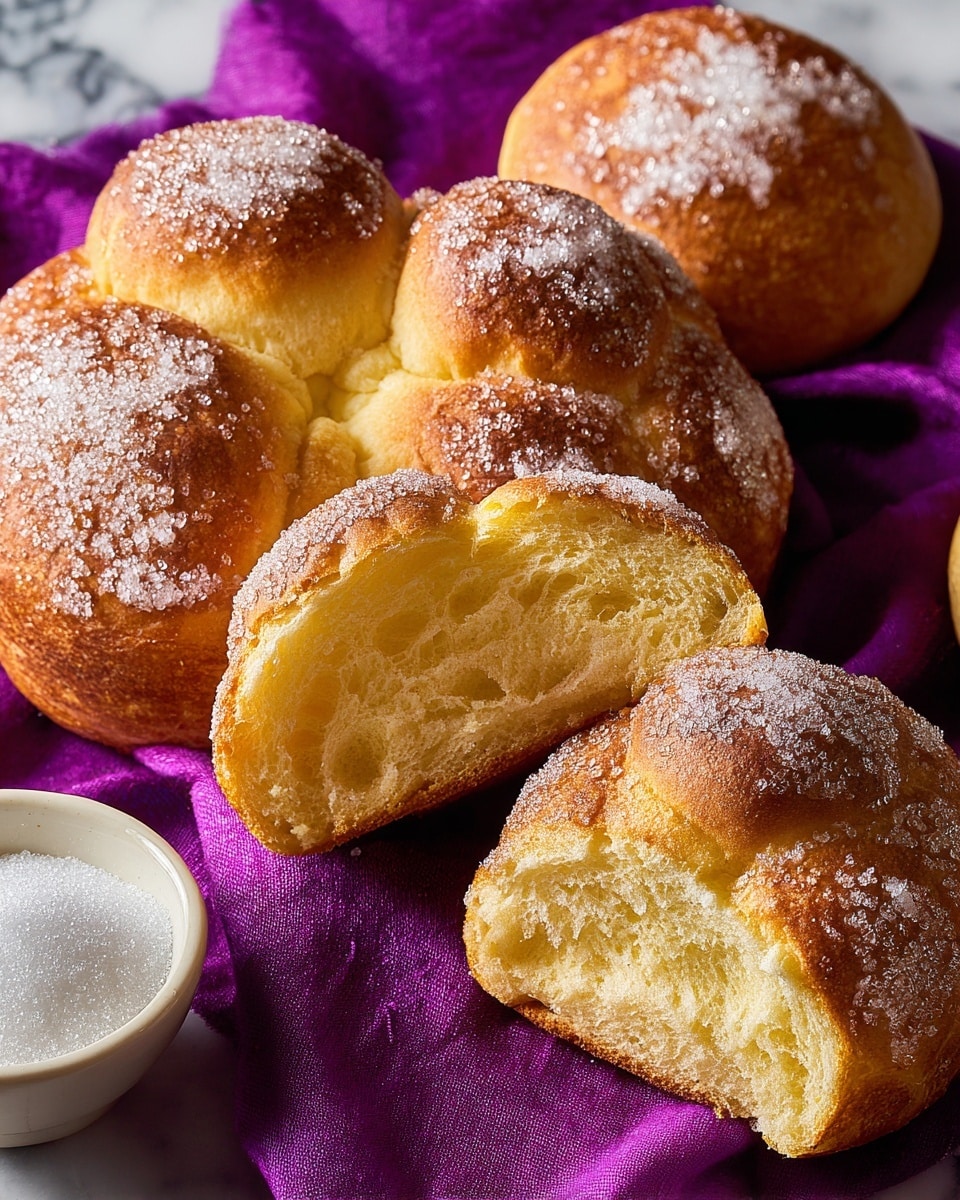
Pan de Muerto is a traditional Mexican sweet bread enjoyed during Día de los Muertos celebrations. Its tender crumb and subtle citrus and anise flavors make it a delightful treat perfect for sharing with family and friends.
Ingredients
- 1/2 cup water, heated to 110°
- 1 (1/4-oz.) packet active dry yeast (2 1/2 tsp.)
- 4 cups (480 g) bread flour, divided
- 1/2 cup (100 g) plus 1 tsp granulated sugar, divided
- 2 tbsp finely grated orange zest (from about 2 oranges)
- 1 tsp anise seeds
- 1 tsp kosher salt
- 3 large eggs
- 1 tbsp orange blossom water
- 3/4 cup (1 1/2 sticks) unsalted butter, room temperature
- Cooking spray
- 3 tbsp unsalted butter, melted
- 2 tbsp granulated sugar
Instructions
- Step 1: In a medium bowl, whisk together the warm water, yeast, 1/2 cup (60 g) bread flour, and 1 tsp sugar until smooth. Let it sit until bubbly and almost doubled in size, about 20 minutes.
- Step 2: Meanwhile, in the large bowl of a stand mixer, rub the orange zest and remaining 1/2 cup (100 g) granulated sugar together with your fingertips. Add the anise seeds, salt, and remaining 3 1/2 cups (420 g) flour and whisk to combine.
- Step 3: Attach the dough hook to the mixer and add the eggs, orange blossom water, and yeast mixture. Mix on low speed until the dough mostly comes together, about 1 minute. It will still have some dry, shaggy bits.
- Step 4: Increase the mixer speed to medium and add the unsalted butter, one tablespoon at a time, beating well after each addition until fully incorporated.
- Step 5: Increase the mixer speed to medium-high and beat the dough for 15 minutes until it is elastic, smooth, and slaps against the sides of the bowl.
- Step 6: Grease a large bowl with cooking spray. Turn the dough into the bowl and turn once to grease the top. Cover with plastic wrap or a clean towel and let rise until doubled, 90 to 120 minutes.
- Step 7: Gently punch down the dough and transfer it to a clean work surface. Pinch off about one-quarter of the dough (approximately 260 g) and cover it. Divide the remaining dough into two equal pieces (about 390 g each).
- Step 8: Flatten one dough portion into a circle. Tug and fold each side (right, left, top, bottom) toward the center, pinching seams to seal. Flip the ball over so the seam is on the bottom. Use cupped hands to tighten the ball by rotating it on the surface. Place on a parchment-lined baking sheet near one corner. Repeat with second dough portion and position it diagonally from the first.
- Step 9: Divide the reserved 260 g dough into 6 pieces. Roll 2 pieces into balls using the tightening method. Roll the remaining 4 pieces into 8-inch ropes. Create 3 indentations in each rope to resemble bones, then drape 2 ropes over each loaf, crossing them at the central indentations. Top each loaf with a small dough ball where the ropes intersect.
- Step 10: Loosely cover the loaves and allow them to rise until puffy, about 30 to 45 minutes.
- Step 11: Position a rack in the center of the oven and preheat to 350°F (175°C).
- Step 12: Bake the loaves until deeply golden brown, 20 to 25 minutes. Tent with foil and continue baking until the internal temperature reaches 190°F (88°C), about 10 to 15 minutes more. Let cool for 10 minutes.
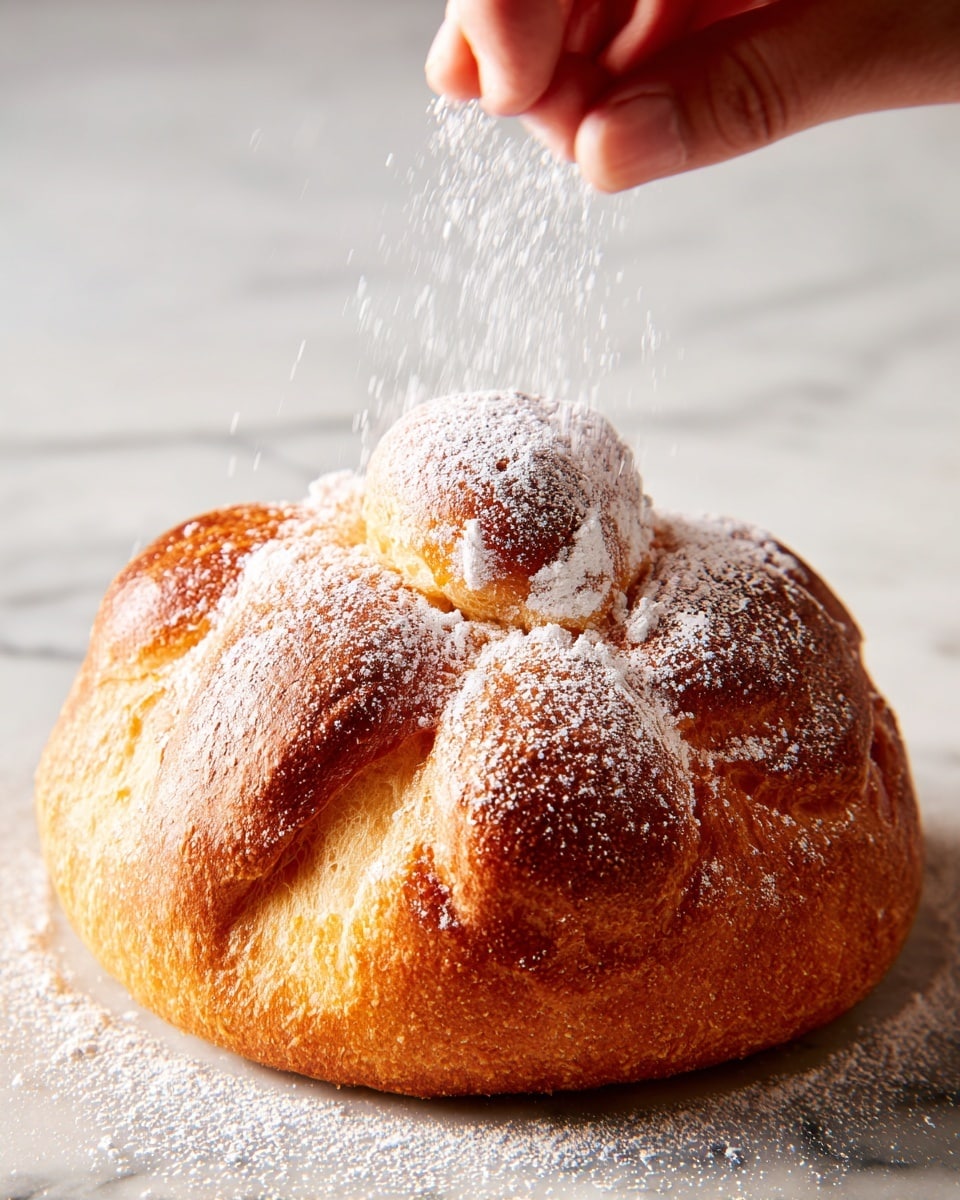
- Step 13: Brush the loaves with the melted butter and sprinkle with the 2 tablespoons sugar while still warm to glaze.
Tips & Variations
- Using fresh orange zest is key to achieving the bright citrus flavor that defines Pan de Muerto.
- If you can’t find orange blossom water, substitute with 1/2 tsp orange extract for a similar aroma.
- For a slight twist, add a pinch of cinnamon or ground cloves to the dough.
- Use a stand mixer with a dough hook to achieve the perfect elastic dough; kneading by hand can be more labor-intensive but still works.
Storage
Store Pan de Muerto in an airtight container at room temperature for up to 3 days. For longer storage, wrap tightly and freeze for up to 2 weeks. To reheat, warm slices in a microwave or oven until soft and fragrant, brushing with a little melted butter if desired.
How to Serve
Serve this delicious recipe with your favorite sides.
FAQs
What does the dough “bones” represent?
The dough “bones” symbolize the deceased loved ones and are a traditional decorative element representing unity and the circle of life.
Can I make this bread without a stand mixer?
Yes, you can knead the dough by hand, though it will take about 15 to 20 minutes of vigorous kneading until the dough is smooth and elastic.
Print
Pan de Muerto: Traditional Mexican Bread for Day of the Dead Recipe
- Total Time: 3 hours 30 minutes
- Yield: 2 loaves (8 servings) 1x
Description
Pan De Muerto is a traditional Mexican sweet bread enjoyed especially during Día de los Muertos celebrations. This recipe creates a soft, fragrant bread flavored with orange zest, anise seeds, and orange blossom water, decorated with dough shaped to resemble bones and dusted with sugar for a beautiful, symbolic finish.
Ingredients
Dough
- 1/2 cup water, heated to 110°F (43°C)
- 1 (1/4-oz.) packet active dry yeast (2 1/2 tsp.)
- 4 cups (480 g) bread flour, divided
- 1/2 cup (100 g) plus 1 tsp granulated sugar, divided
- 2 tbsp finely grated orange zest (from about 2 oranges)
- 1 tsp anise seeds
- 1 tsp kosher salt
- 3 large eggs
- 1 tbsp orange blossom water
- 3/4 cup (1 1/2 sticks) unsalted butter, room temperature
For Baking and Finishing
- Cooking spray
- 3 tbsp unsalted butter, melted
- 2 tbsp granulated sugar
Instructions
- Activate yeast: In a medium bowl, whisk together the warm water, yeast, 1/2 cup (60 g) bread flour, and 1 tsp sugar until smooth. Let the mixture sit undisturbed until it bubbles and nearly doubles in size, about 20 minutes.
- Prepare dry ingredients: In the large bowl of a stand mixer, rub the orange zest and remaining 1/2 cup (100 g) granulated sugar together with your fingertips to release aromas. Add the anise seeds, kosher salt, and remaining 3 1/2 cups (420 g) flour and whisk to combine evenly.
- Combine dough: Attach the dough hook to the stand mixer. Add the eggs, orange blossom water, and the yeast mixture to the dry ingredients. Mix on low speed for about 1 minute until dough starts coming together but is still shaggy and dry in places. Increase speed to medium and gradually add softened butter 1 tablespoon at a time, ensuring each addition incorporates before adding more.
- Knead dough: Increase the mixer speed to medium-high and beat the dough for 15 minutes. The dough should become elastic, smooth, and start slapping against the sides of the bowl.
- First rise: Spray a large bowl with cooking spray. Transfer the dough to the bowl and turn it once to coat all sides with grease. Cover with plastic wrap or a kitchen towel and let rise in a warm place until doubled in size, about 90 to 120 minutes.
- Divide dough: Gently deflate the risen dough by punching down to remove large air pockets. Turn the dough out onto a clean work surface (no flour needed). Pinch off about one-quarter of the dough (approx. 260 g) and set aside covered. Divide the remaining dough into two equal portions (about 390 g each).
- Shape loaves: Flatten one large portion into a circle. Stretch the right side towards the center, fold it in; repeat with the left, top, and bottom edges folding towards center, pinching seams to seal. Flip over so seam is underneath and use cupped hands to roll and tighten into a smooth ball by friction against the surface. Place loaf on a parchment-lined baking sheet near one corner. Repeat with the second large portion placing it diagonally opposite the first.
- Prepare decorative pieces: Divide reserved 260 g dough into 6 pieces. Roll 2 pieces into small balls (these will be the ‘skull’ decorations). Roll the remaining 4 pieces into 8-inch ropes; create 3 indentations in each rope with your fingers to mimic bones.
- Add decoration to loaves: Drape 2 ropes over each loaf crossing at the central divots so they form a cross pattern, representing bones. Place a small ball on top where the ropes cross on each loaf.
- Second rise: Loosely cover the decorated loaves and let them rise until puffy, about 30 to 45 minutes.
- Preheat oven: Position a rack in the center of the oven and preheat to 350°F (175°C).
- Bake loaves: Bake the loaves for 20 to 25 minutes until deeply golden. Tent loosely with foil and continue baking until an instant-read thermometer inserted into the bread’s center registers 190°F (88°C), about 10 to 15 minutes more. Remove from oven and let cool for 10 minutes.
- Glaze and sugar: Immediately brush the warm loaves with melted butter and sprinkle evenly with granulated sugar for a sweet, shiny finish.
Notes
- Use fresh yeast for best rise and fluffiness.
- Orange blossom water adds authentic floral aroma but can be omitted if unavailable.
- Letting the dough rise in a warm area speeds fermentation; avoid cold drafts.
- You can store leftover Pan De Muerto in an airtight container for up to 3 days or freeze for longer storage.
- Reheat slices gently before serving for a soft texture.
- Prep Time: 40 minutes
- Cook Time: 40 minutes
- Category: Bread
- Method: Baking
- Cuisine: Mexican
Keywords: Pan De Muerto, Mexican sweet bread, Día de los Muertos bread, anise bread, orange blossom bread, festive bread, traditional Mexican recipe